
Last week, we looked at some other things besides the USA that are turning 250 in 2026. As promised, here are a few more:
The Dominguez-Escalante expedition

Atanasio Dominguez and Silvestre Vélez de Escalante were two priests from New Spain, who set out on July 29th 1776 to find an overland route from Santa Fe de Nuevo México to the missions of Spanish California. Along with them were several other Spanish, New Spanish, and native people, most notably Bernardo de Miera y Pacheco, a cartographer from Cantabria. Though they didn’t ultimately reach California, they did chart a good portion of the Colorado Plateau and what would become the American Southwest, The expedition’s goal of a road to California would be realized with what’s now called the “Old Spanish Trail”, for which Miera’s maps were essential.
The Illuminati
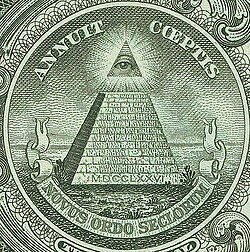
Though the conspiracy theories surrounding the Illuminati have far outgrown their historical origin, there actually was a secret society named the “Illuminati” in 18th century Bavaria, founded on 1 May 1776. The Illuminati’s original purpose, as described by its founder Adam Weishaupt, was to curb the influence of the Catholic Church and the Bavarian monarchy in public life, but they would eventually spread into other German states, and from there to neighboring places like Italy, France, and Poland.
It’s unclear if the Bavarian Illuminati had as much power as they claimed to, much less what modern conspiracy theorists credit them for. Either way, secret societies were banned in Bavaria in 1785, and many Illuminati members were put in prison or driven into exile. Historical records show that the society collapsed with its leadership and power center gone, but their influence certainly lives on – even if only in the public imagination.
Edward Gibbon’s Decline and Fall of the Roman Empire

The first volume of Edward Gibbon’s historical magnum opus was published in February 1776. The work actually goes beyond the fall of the Western Roman Empire, starting as early as the reign of Trajan in 98 CE, and extending well past the fall of Constantinople, as far as the year 1590.
Gibbon was writing with an agenda, and tried to paint his contemporary “Age of Reason” as the first to finally resume the progress that was lost after the fall of Rome. Modern historians dispute this narrative, but Gibbon’s work remains influential in the story of both Rome and the author’s own era.
Phi Beta Kappa
 The academic honors society Phi Beta Kappa was founded at the William & Mary in 1776, holding its first meeting on December 5th of that year, with students hosting academic debates behind closed doors, under the cloud of the Revolutionary War. In the 1780s, the society expanded to Yale, Harvard, and Dartmouth. Though originally acting as a secret society, it later opened up its doors in the 19th century, becoming an honors society for scholarly students in the liberal arts and sciences. Today, they boast that their membership has included 17 US Presidents, 42 Supreme Court Justices, and over 150 Nobel Laureates.
Viceroyalty of the Río de la Plata
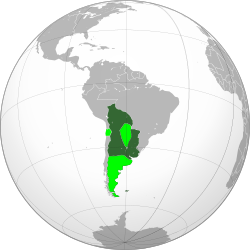
The Spanish Crown split the Viceroyalty of the Río de la Plata from the Viceroyalty of Peru in 1776. Geographically, its area covered most of what is now Argentina, Uruguay, Paraguay, and Bolivia, as well as northern Chile. The Spanish wanted to gain control of the illegal trade happening in Buenos Aires, and protect the area against encroachment by Britain and Portugal. Though the goals were partially achieved – Buenos Aires and Montevideo successfully fended off the British during the Napoleonic Wars – the Viceroyalty would prove short lived, as the entire area would leave the Spanish Empire during Latin Americn Wars of Independence of the early 1800s
Submarine warfare

Turtle was the first submersible used in warfare. Built in 1775 by American inventor David Bushnell, it was first used to attack the British warship Eagle in New York Harbor in 1776 during the Revolutionary War. The attack was ultimately unsuccessful: according to American sources Bushnell tried to jam a spar torpedo to the underside of Eagle, but it failed to attach to the hull, and later exploded harmlessly in the East River. British records show no such attack – it’s possible either side fabricated records for morale reasons. Either way, Turtle itself is well documented, and the first submersible designed for war.
Leave a Reply